Improvements
We’ve released a major update to the PULT Dashboard Home page, delivering a clearer, more actionable overview for administrators. This update introduces several new visualisations and improvements designed to streamline daily monitoring and decision-making.
✨ What’s New
1. Office Bookings vs. Attendance Today
- A revamped graph now displays today’s office bookings, presence detection/Check-ins, and absences (vacation or sick leave) sourced from your integrated HRIS.
- Hover interactions reveal exact numbers for each data point.
2. Visitors Overview
-
A new Visitors section summarises:
- Visitors arriving today
- Expected visitors this week
- Includes a fast-action option to check in the next arriving visitor.
3. Meeting Rooms & Catering
-
Meeting Rooms
- Shows the number of pending suggestions from the scheduling agent.
- Includes a quick-access button to navigate directly to the scheduling page.
- If no catering data is available, the next pending suggestion is displayed here.
-
Catering
- Displays how many meetings require catering today and this week.
- Includes a shortcut button to the catering management page.
4. Weekly Bookings Graph
-
Provides a clear weekly breakdown of:
- Bookings + actual check-ins for past days
- Default + planned bookings for upcoming days
- Hovering shows exact values and office capacity for better context.
5. Active Announcements
- Highlights currently active emergency or general announcements.
- If none are active, upcoming announcements are displayed instead.
- Includes a button linking to the announcements management page.

Familiar Tables
-
The bottom of the page includes the:
- Office Usage Today table
- Usage Details Today table
- These continue to provide employee-level insights on bookings and attendance.

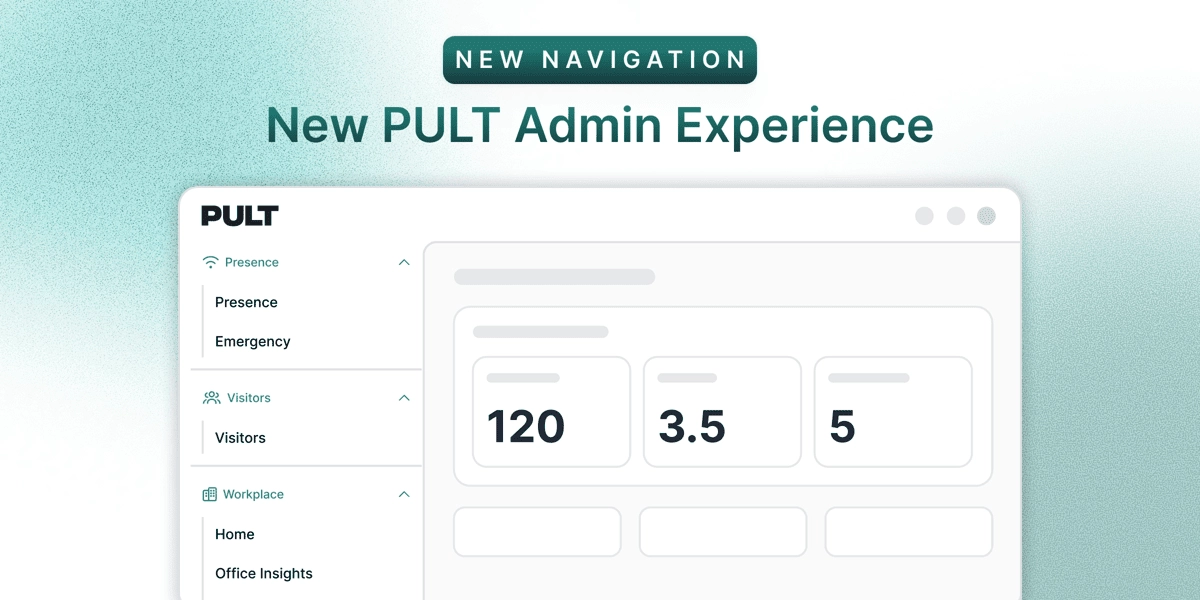
PULT’s dashboard navigation and structure have been radically redesigned with a cleaner, modern look and a more logical, user-friendly layout.
- Redesigned primary and secondary navigation bars for clearer orientation and quicker access to key sections.
- More intuitive menu grouping, ensuring related tools and pages are organised together in a logical flow.
- Improved labeling to reduce guesswork and help users understand where they are at all times.
- Consistent navigation placement across all pages so users don’t need to relearn layouts when moving through the dashboard.
For detailed guidance on navigating the updated dashboard and making the most of its new structure, visit our Help Center. Here you’ll find step-by-step instructions, tips, and screenshots to help you get familiar with the changes.

Users can now set “Absent” as a default option for specific weekdays in their personal settings.
This is especially helpful for team members who work a 4-day week or have part-time schedules.
Why this matters:
Previously, many users marked their non-working days as “Time off”, which wasn’t accurate and created inconsistencies with HR systems. With this update, users can now correctly mark non-working days without affecting vacation or leave tracking.
This improvement ensures cleaner data, fewer HR adjustments, and a more accurate reflection of each person’s work schedule.

You can now configure default workplace selections based on teams in Pult. This update is especially useful for organisations with diverse user groups where not everyone should have access to the same default workplace options.
What’s new:
- Admins can assign team-specific default workplaces, ensuring users only see the options relevant to them.
- Functionality works similarly to desk policies, providing a familiar setup flow.
- Improved control and clarity for teams with different workspace entitlements.
This enhancement helps organisations streamline workplace management, reduce confusion for users, and maintain better access control across teams.

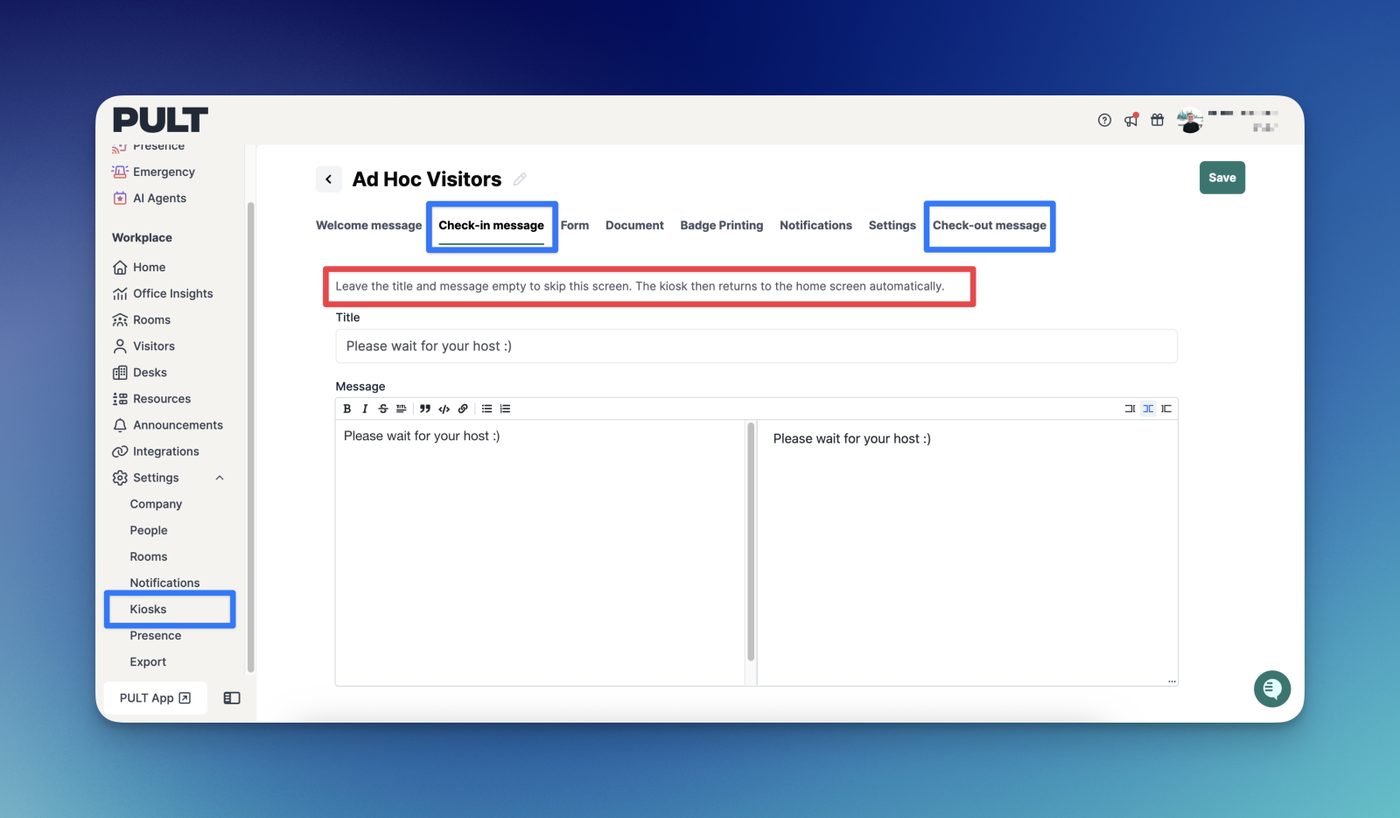
We’ve improved kiosk email notifications to properly display date and time in your organisation’s timezone.
What’s changed:
- Previously, all timestamps were shown in UTC, which could cause confusion for teams in different timezones.
- Email templates for kiosk check-ins are now timezone-aware, reflecting your organisation’s local time.
This update ensures that all kiosk-related notifications are clear, accurate, and aligned with your local time, reducing misunderstandings and improving usability.

We’ve enhanced the integration between Factorial and PULT to support a wider range of absence categories.
What’s new:
- Absence types can now sync as Remote or Business Trip in addition to the existing Vacation and Sick Day categories.
- More accurate mapping of employee location across systems.
This update ensures smoother workforce management and more complete absence tracking across your Factorial and PULT environments.

We’ve enhanced the Usage Details graph to provide clearer insight into where live Presence data is coming from.
Users can now immediately see whether Presence information is being sourced from the installed PULT Agent or from Wi-Fi–based detection.
What’s improved:
- Added a visible indicator of the active Presence data source
- Improved transparency for troubleshooting and device validation
- More accurate usage insights thanks to clearer data provenance
This update helps ensure users always know how Presence is being detected—bringing more clarity and confidence to your device data.

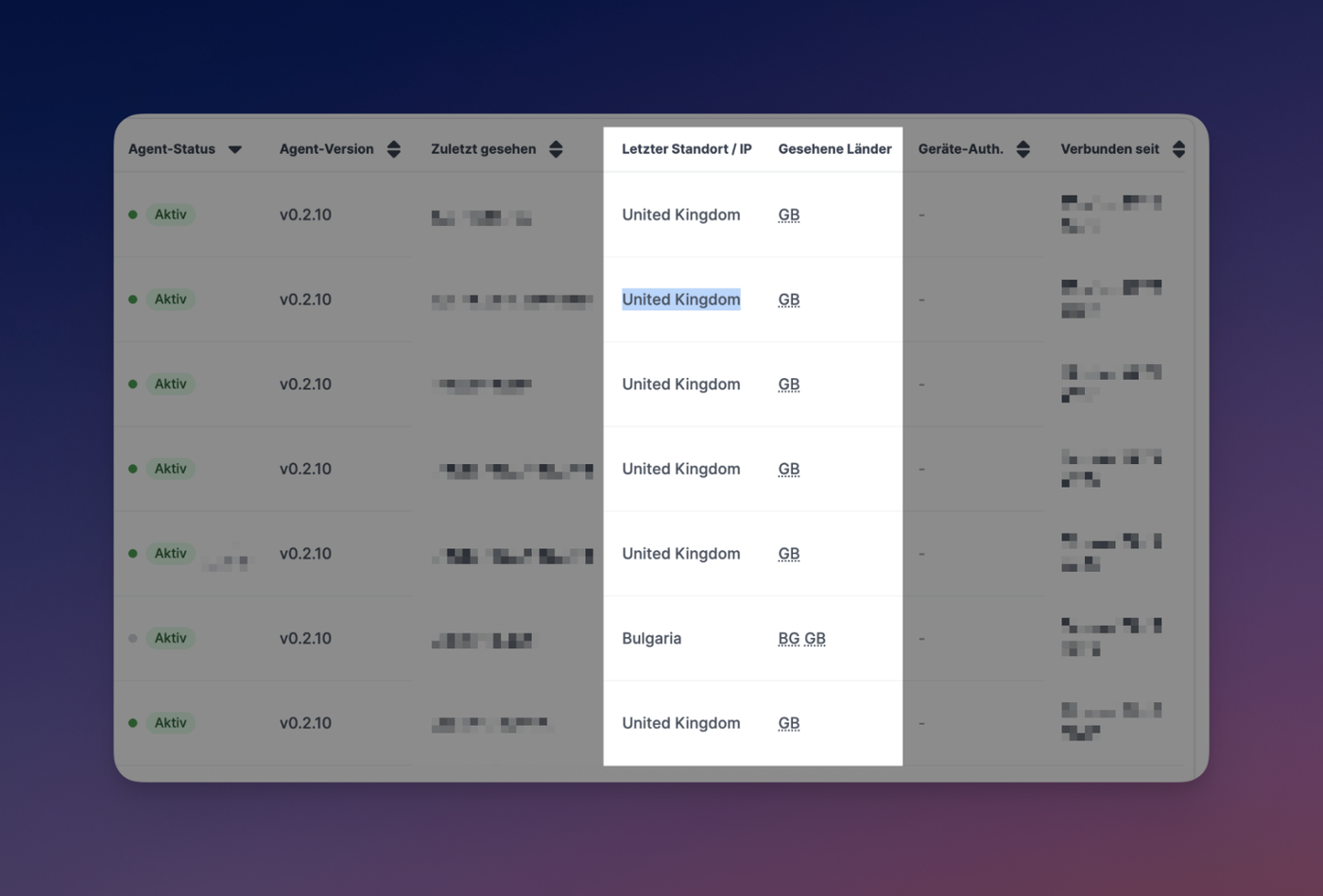
We’ve introduced improvements to Device Authentication, offering an additional option for validating Presence data.
The PULT Agent can now be installed directly on company laptops, allowing Presence to be tracked securely through the device itself.
đź’ˇ Why this matters
Performing this verification step helps you identify unauthorised devices, detect anomalies, and reduce potential security risks.
🚨 Security Notice
Please note that certain device details — including operating system, username, serial number, and location — can be spoofed and should not be fully relied upon.
Only the IP address is considered a reliable indicator.
Before approving any device authentication request, always verify:
- The request time
- The IP address
-
That both match expected patterns and devices within your organisation