Here you'll find all the latest updates and improvements we've made to the platform. If you have any questions, feel free to reach out to our support team at support@pult.com
We've launched the Agent Hub — a dedicated space to manage and access all of PULT's AI agents in one place.
Agents are purpose-built to automate complex workplace tasks that previously required manual analysis. The hub gives you a clear overview of what's available, what's active, and what's coming next.
The following agents are available today:
Room Agent — Optimizes office space by automatically identifying inefficient bookings, so your meeting rooms and desks are used as effectively as possible.
Inventory Agent(Beta) — Tracks supply usage by correlating presence data with consumption patterns, giving you a clearer picture of what's being used and when.
You can find the dedicated Agent Hub tab in your Pult dashboard.
Admins can now configure how long visit data is retained under Privacy Settings in the dashboard. Set a retention period in days, after which visits — along with their associated kiosk records and signed documents — are automatically deleted. Leave it unset to keep data indefinitely.
The Rooms Management Page in the Dashboard now includes a search bar and alphabetical sorting, making it easier to find the right room when you have a large number of meeting rooms.
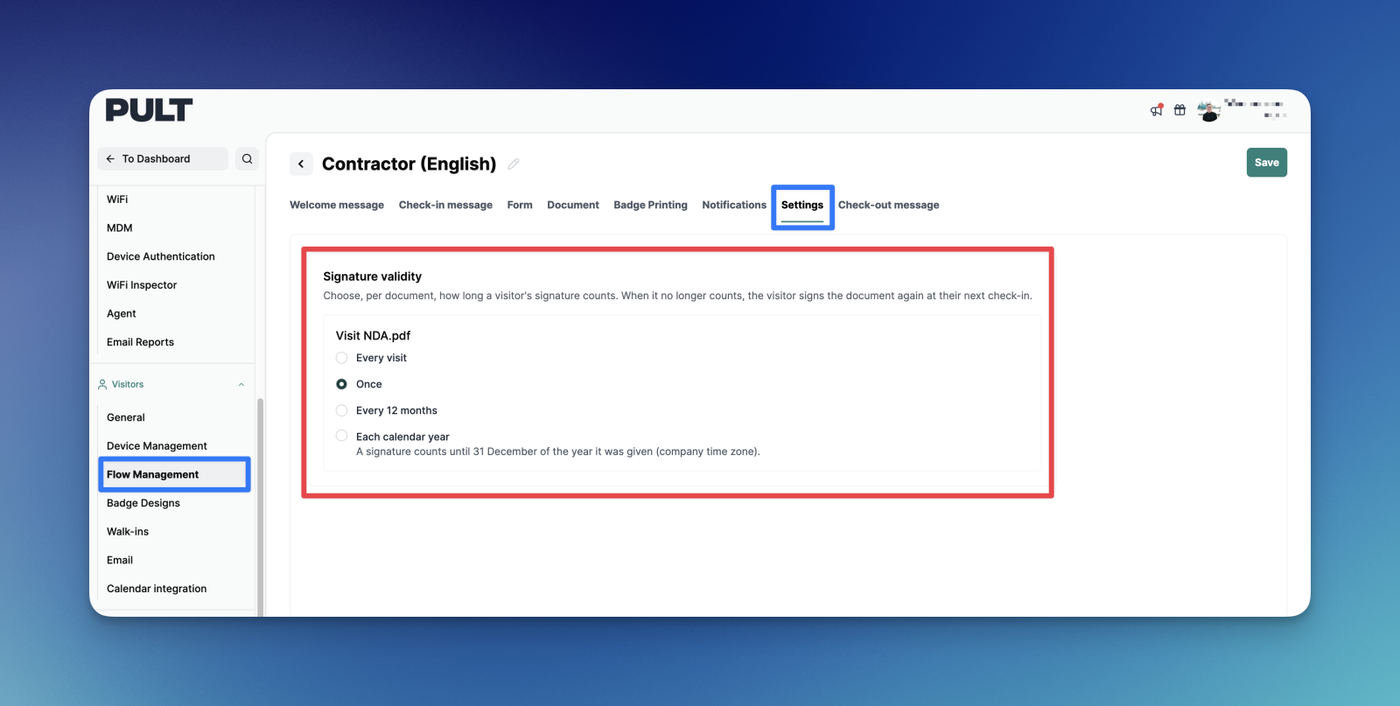
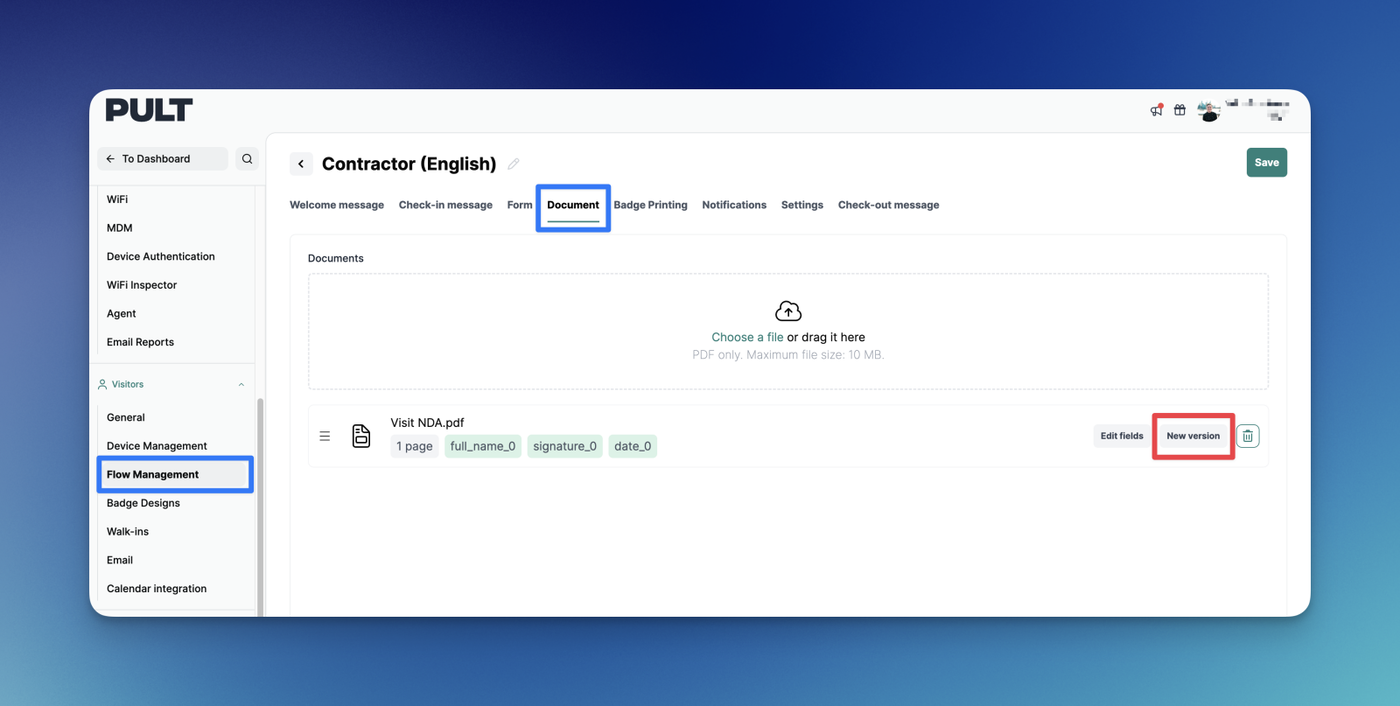
In the Kiosk flow settings, you can now choose whether forms and documents are required onevery visit orjust once per visitor— giving you more control over the check-in experience without unnecessary repetition for returning guests.
Users can now configure visitor types and flows per device. Each iPad at a site can show a different set of visitor types and flows — so guests only see the options relevant to them at check-in. Applies to both pre-registered and walk-in visits.
Admins can now override desk policies when booking guests. Previously, desk policies (such as capacity limits and booking restrictions) applied uniformly to all bookings, including guest reservations. With this update, workspace administrators have the flexibility to bypass these restrictions when needed for guest bookings.
Key Details:
Enables overriding desk policies specifically for guest bookings
Provides greater flexibility for managing visitor reservations
You can now assign a kiosk to multiple office locations at once, so a single check-in iPad can serve visitors across different groups or floors within the same building.
Previously, each kiosk was tied to one specific office. Visitors invited under a different office couldn't find themselves on that kiosk — even if they were physically in the same location. This made it impossible to run a single check-in point for an entire site.
With this update, you can select multiple offices when setting up a kiosk. Any visitor belonging to one of those offices will now be findable at that shared check-in point.
When you select an office location, the parking lot section now automatically updates to show the matching parking lot for that location — no extra steps needed.
If a match is found, the parking map loads right away. You can still override this and pick a different parking lot manually if needed. If no parking lot exists for your selected office, the section will clearly indicate that none is available.
Switching to a different office location will reset the parking selection and re-run the matching automatically.
New concept — Presence Locations: The Presence Settings page now includes a new Presence Locations tab. This replaces what was previously known as "office location" for presence-related purposes.
Clearer separation of concerns: The old "office location" concept has been split into two distinct entities:
Locations (formerly office locations) — editable from the Desk Management page and can now be assigned to offices.
Presence Locations — carry all presence-specific configuration (e.g. IP ranges), and are managed from the Presence Settings page.
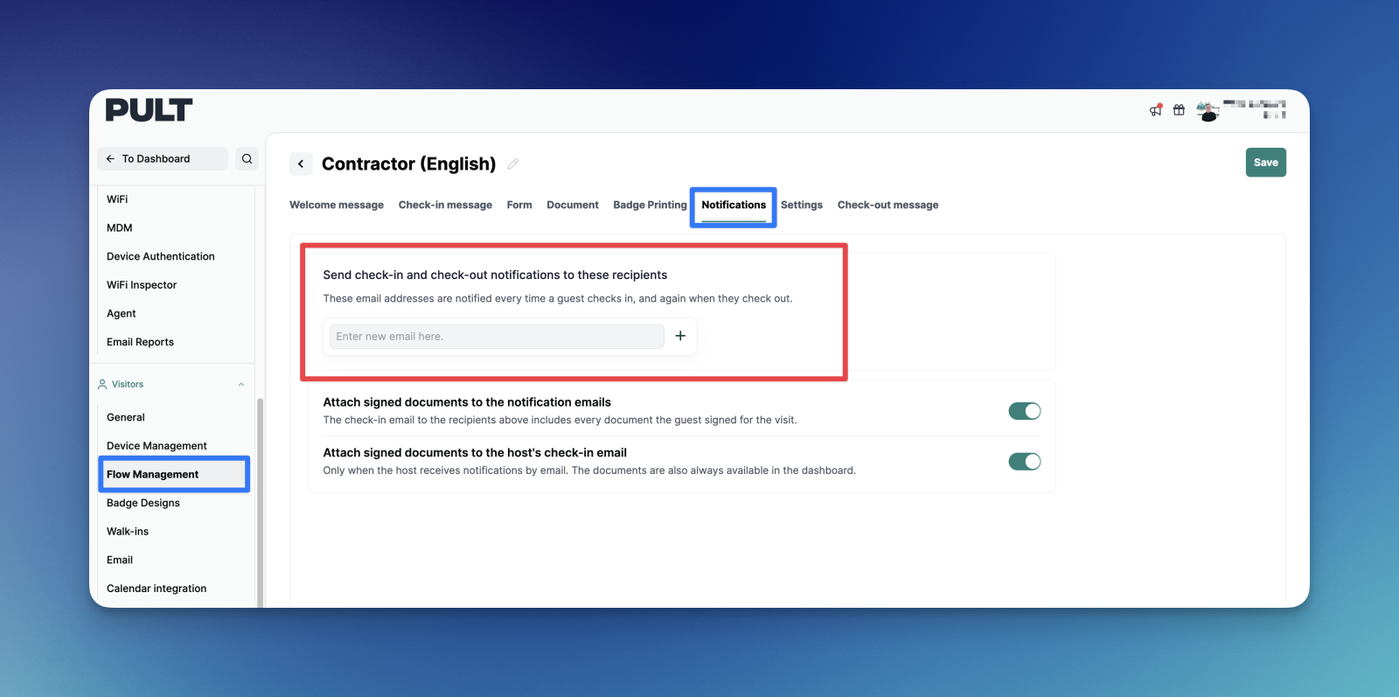
Link presence locations to offices: When editing an office, you can now associate a Presence Location with it. This enables more precise auto check-in behaviour — bookings are only confirmed when the detected presence location matches the office associated with the booking.
New dashboard page: A dedicated page in the dashboard now lets admins monitor Pult Agent deployments, track utilization, and review related metrics at a glance.
We've shipped a major round of improvements to Visitor Management, covering everything from how visitors are invited to how they check in — plus several quality-of-life fixes for admins.
Redesigned Visitor Invite Flow
Inviting a visitor has been completely reworked. Hosts can now provide richer information when sending an invite, including:
Visitor type — choose from configurable types (e.g. Standard Visitor, Recruiting, Contractor) so the right questionnaire and flow is automatically applied to each guest.
Internal notes — add context about the visit that's only visible to admins in the Pult dashboard.
Invite on behalf of others — assistants and office managers can now invite guests on behalf of a different host by selecting them from a dropdown.
Email is optional — an email address is no longer required to make a booking. Note that as a result, desk booking for a visitor is only available when an email address is provided.
Other improvements to the invite flow:
Location Filter — Bookings can be filtered by location.
Search for past guests — a new search bar lets hosts quickly find and select previously invited visitors. Search by name, surname, email or company
Pre-fill from past visits — selecting a past guest automatically pre-fills their details, so repeat invites take just a few seconds.
Easier booking edits — existing bookings can now be edited directly, without having to cancel and recreate them.
Visitor Types
— a brand new feature that gives admins fine-grained control over the check-in experience for different kinds of visitors. Create visitor types (e.g. Standard Visitor, Contractor, Recruiting) and link specific check-in flows to each one. This is particularly powerful for scenarios like:
Serving questionnaires in different languages for international visitors
Including or excluding an NDA signing step depending on the visitor type
How it works:
Create a visitor type, then link the relevant flows to it.
When a visitor checks in, they'll be presented with a choice of flows — and admins control what each option is called, so the labels shown to visitors are fully customisable.
This is what Visitors will see in the example of language selection:
Faster Check-In
Check-In No Longer Requires an Email
Visitors no longer need to provide an email address to check in.
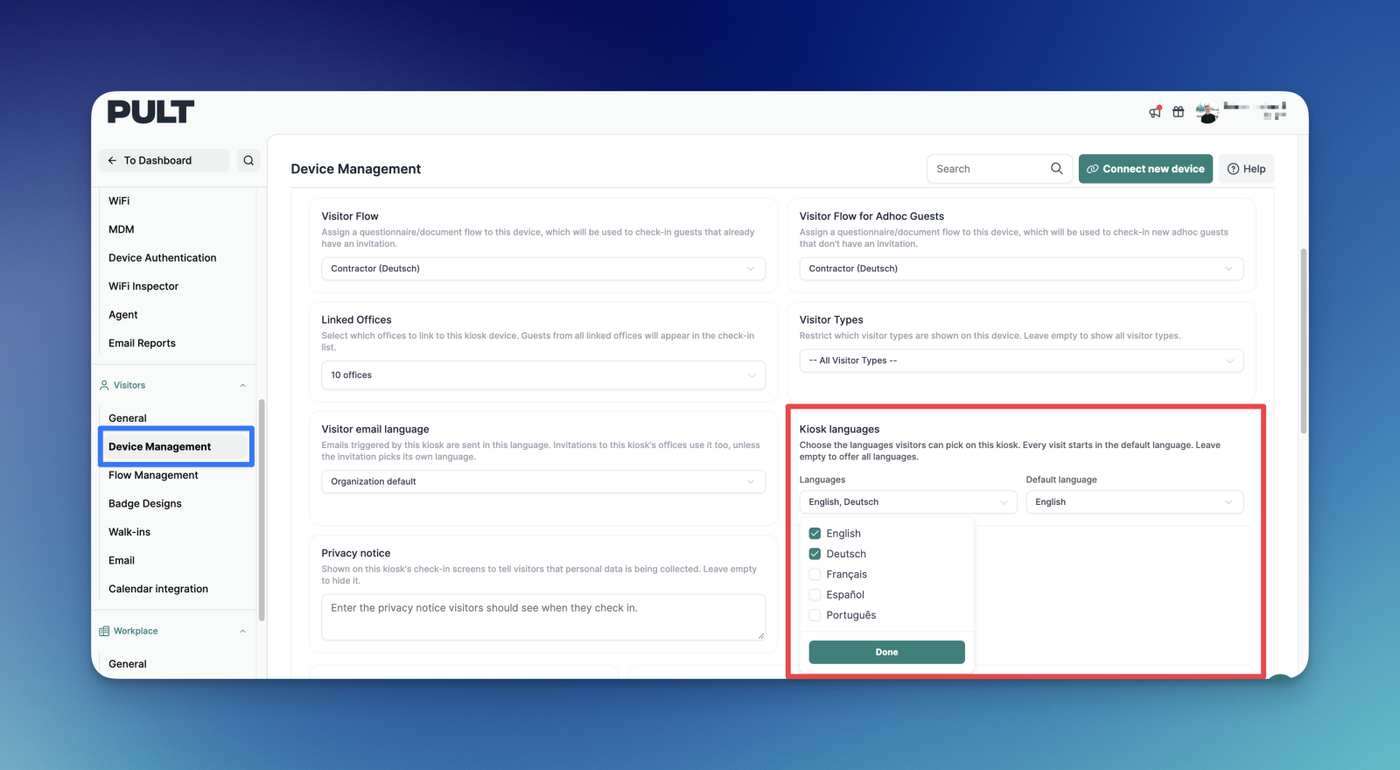
Kiosk Language Selection
Hosts and reception teams can now set their preferred language for the Kiosk check-in experience. Choose between:
Once configured, the entire visitor-facing check-in flow — including prompts, instructions, and confirmation messages — will display in the selected language, ensuring a seamless and consistent experience for your guests
QR Code Check-In
Visitors can now be checked in via a personal QR code — a much faster option when large groups arrive at once. This can be configured by kiosk, and will not automatically be applied to all.
Admin Dashboard Updates
The Visitor Management dashboard has been refreshed with improvements for admins:
Quick invite tab — invite a guest directly from the dashboard without navigating away.
Internal notes — add and view visit notes from the dashboard view.
Have feedback on these features? Reach out to your account manager or contact our support team.